
Petition – Protect Disabled people who cannot work from planned cuts to benefits
Note: Content below copied from Petition.parliament.uk
https://petition.parliament.uk/petitions/721547
https://petition.parliament.uk/petitions/721547
It’s the greatest medical scandal of the 21st century. For decades, patients with ME/CFS (myalgic encephalomyelitis/chronic fatigue syndrome) have been told they can make themselves better by changing their attitudes. This devastating condition, which afflicts about 250,000 people in the UK, was psychologised by many doctors and scientists, adding to the burden of a terrible physiological illness.
Long after this approach was debunked in scientific literature, clinicians who championed it have refused to let go. They continue to influence healthcare systems, governments and health insurers. And patients still suffer as a result.
ME/CFS saps sufferers of energy and basic physical and cognitive functions, confining many to their homes or even their beds, often shutting down their working lives, social lives and family lives. The extreme seriousness of this condition, and the fact that there is neither a diagnostic test nor a validated treatment, places a special duty of rigour on doctors and researchers. But patient care has been compromised, and useful research inhibited, by the lingering conviction of many practitioners that ME/CFS is “psychosocial”: driven by patients’ beliefs and behaviour.
This was a story that found me. In 2021, after writing about long Covid, I was accused by the psychiatrist Prof Michael Sharpe of spreading it. Apparently, you could induce such illnesses by discussing them. Investigating further, I was astonished by the failure in his presentation to support his claim with evidence, and perturbed by his lack of satisfactory answers to my questions. Sharpe takes a similarly “biopsychosocial” approach to ME/CFS, one which at the time of his long Covid presentation still dominated medical practice in the UK.
You can trace the origins of this model to a paper published in 1970. Without assessing a single patient or interviewing a single doctor, it blamed an earlier outbreak of post-viral ME/CFS on “mass hysteria” based on case notes alone. The reasoning included the fact that the outbreak affected more women than men. For centuries, doctors have been readier to classify women’s illnesses as hysterical or psychosomatic than they have men’s. ME/CFS, like long Covid, hits women harder, so, the thinking goes, it must be all in the mind.
Freedom of information requests to the National Archives show how the biopsychosocial model became embedded in research practice and government policy. The minutes of a meeting on government benefits policy in 1993 give a sense of the position of the psychiatrist Simon Wessely at the time. As summarised in the minutes, he told the meeting that ME/CFS is “not a neurological disorder”. He reportedly claimed that apparently severe cases were likely to result from either a “misdiagnosed psychiatric disorder or poor illness management”, while many cases were “iatrogenic”: caused by medical examination or treatment. His views were apparently that “the worst thing to do is to tell them to rest”, “exercise is good for these patients”, “most cases can be expected to improve with time” and, perhaps most shockingly, “benefits can often make patients worse”.
Every one of these claims now appears to be without foundation. But they became the basis of the dominant approach in this country to attempting to treat ME/CFS. The toll of patient suffering is hard to imagine.
In 2007 this belief system became official guidance: the National Institute for Health and Care Excellence (Nice) advocated two treatments arising from the biopsychosocial model of the disease: graded exercise therapy (GET) and cognitive behavioural therapy (CBT). In 2011, a major study, the Pace trial, part-funded by the Department for Work and Pensions, claimed to show that GET and CBT were effective in treating ME/CFS. The study later turned out to be biased and profoundly flawed.
The believers were championed by the Science Media Centre, of which (now Professor Sir) Simon Wessely was a founder member. Some of the media’s reporting, influenced by the centre, portrayed ME/CFS patients as abusive, threatening, workshy and resistant to treatment.
As the doctrine spread through the medical profession, some practitioners adopted the same attitudes. A paper promoting psychological treatments lamented the “difficult challenge of … managing patients’ resistance to the treatment”, which arose from “lack of acceptance as to the rationale”. Nurses observed that “the patient should be grateful and follow your advice [but] the patient is quite resistant and there is this thing like you know, ‘The bastards don’t want to get better’.”
We now know that patients were right to resist interventions that have proved to be both useless and harmful. The impacts were often horrific. A study in Switzerland found that the most powerful factor contributing to suicidal thoughts among people with ME/CFS was “being told the disease was only psychosomatic”.
Some patients were forced into these treatment regimes, even locked in psychiatric units to make them comply. Some parents of children with ME/CFS were referred to social services for supposedly encouraging their belief that they were ill. Though unevidenced, the biopsychosocial model influenced the government’s social security policy, reinforcing its coercive treatment of people seeking disability benefits.
In 2020, an independent review by Nice found that the quality of all the research promoting GET and CBT was either “low” or – mostly – “very low”. A paper reported that the thresholds in the 2011 Pace study at which patients were deemed to have recovered had been altered after the trial began. Several studies concluded that GET was actively harmful , as the exercise regime it promoted could worsen patients’ symptoms, causing post-exertional malaise. One paper reported that it was detrimental to the health of at least 50% of patients.
As a result, in 2021 Nice concluded that GET and CBT should not be used to treat ME/CFS (though more conventional CBT can help patients with the psychological impacts of the illness). Similar shifts had already happened in the United States and the Netherlands. The condition is now correctly recognised as a physiological illness. Last month, a paper in the journal Nature Communications proposed a possible physiological mechanism for the condition.
But some people never give up. Despite an overwhelming weight of evidence, the old believers, including Sharpe and Wessely, have continued to try to justify their model, obliging Nice recently to publish a strong refutation. Protected by powerful friends in the media, they could breathe life into their hypothesis long after it had been debunked. The new evidence-led thinking has yet to penetrate parts of the health system: some patients are still being mistreated.
This is not how science should work. Beliefs should be based on evidence. In medicine, there is a double duty: respect the evidence and listen to patients. There is a psychological intervention that could improve the lives of people with ME/CFS: an apology and recognition of the harms they have suffered.
George Monbiot is a Guardian columnist
Join George Monbiot for a Guardian Live online event on Wednesday 8 May 2024 at 8pm BST. He will be talking about his new book, The Invisible Doctrine: The Secret History of Neoliberalism. Book tickets here
Do you have an opinion on the issues raised in this article? If you would like to submit a response of up to 300 words by email to be considered for publication in our letters section, please click here.
• This article was amended on 12 March 2024 to replace an incorrect hyperlink.
guardian.co.uk © Guardian News & Media Limited 2010
Published via the Guardian News Feed plugin for WordPress.
The #ThereForME team have published the first version of their UK Ecosystem Report for ME and Long Covid, created in collaboration with CrunchME. This report maps out key stakeholders and initiatives across the UK, aiming to inform advocacy efforts, policymakers, and potential funders of research and care.
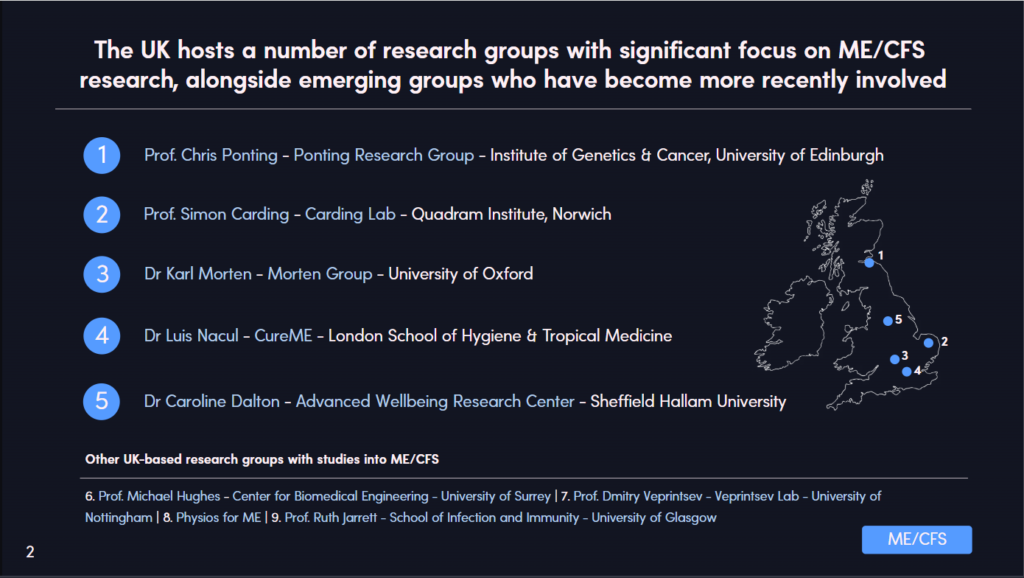
The report tracks active and future ME/CFS research projects within the UK. Following each overview slide like the one below, are detailed additional slides showing the technical nature of the work and interventions being trialled.
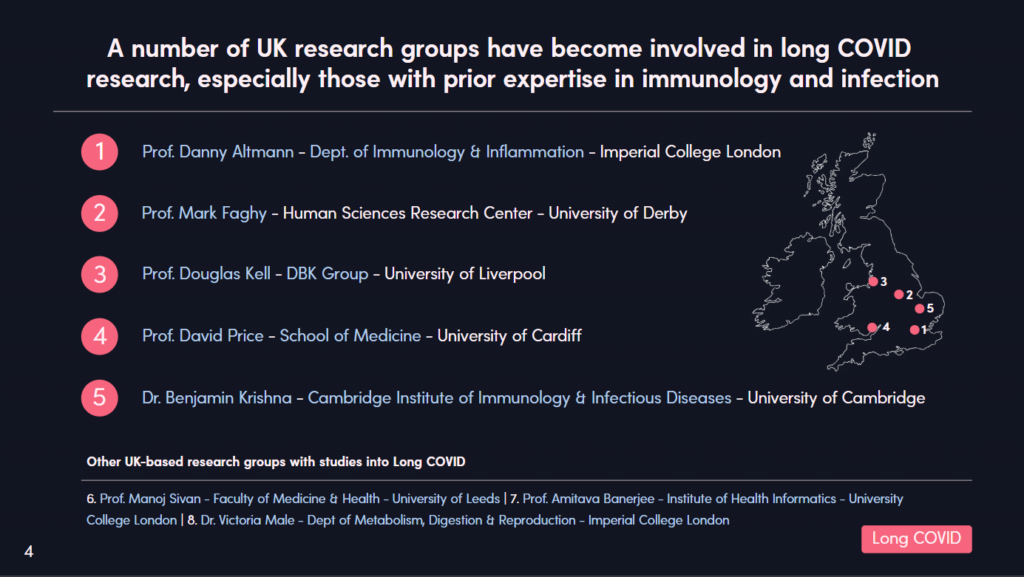
Following slides go in to show research projects for Long Covid within the UK, Clinics and Clinicians, Biotech resource, and forthcoming conferences.
The full UK ecosystem report for ME and Long Covid can be found here
Everything about the #TherForME campaign can be found on the TherForME website
https://www.change.org/p/stop-the-new-4-point-pip-rule

The Issue
I am a chronically ill Independent PIP Consultant with the goal of providing the kind of support and awareness I WISH was available when I first became chronically ill (I was 29 years old, I am now 47).
I am entitled to and do claim PIP myself; this funding changed my life. The Government’s recent decision to introduce a new rule is threatening this lifeline for those who have fought through the invasive, degrading assessment process and finally won. They/we depend on this support.
They are saying you now need a MINIMUM score of 4 points in at least ONE daily living activity to keep/get the daily living funding from 2026 (new claims and on reviews). This change WILL deny access to the daily living component to those who are genuinely in need but cannot score the 4 points in a single activity. We know through our experiences the way the scores are allocated rarely match our daily life, many should have had 4 points but do not get this result.
The Government must reconsider this change. We MUST protect the most vulnerable among us and ensure their dignity through compassionate support. Therefore, we need to urge our Government to reassess this new rule.
We need 100,000 signatures and then this (legally) must be discussed in parliament. I am not trying to be our spokesperson but I am trying to unite us. We need to raise our voices so loudly that activists and specialists can continue fighting on our behalf. This is how we help ourselves and those that cannot fight for themselves.
Remember, YOU, your family, friends, neighbours and co-workers CAN all sign this petition
It is NOT acceptable to target a vulnerable community WE MUST SPEAK UP and be HEARD
Please, sign this petition now, please sign for the chronically ill, sign for fairness, and sign for justice.
Short excerpts from coverage at Westminster where many were opposing benefit cuts, with a some specific mentions of ME.
Julie interviews our three #ThereForME heroes. A relaxed chat about how the campaign came to be, how they all met, how ideas for their campaign tend to crystallise. They talk about the the #FundThePlan initiative and how their campaign might grow in the future.
Buzzfeed link provided above as well as Spotify, as it doesn’t currently require a subscription to listen. Listening via Spotify makes it easier to listen whilst doing something else on your browser or phone.
Find all other episodes in this series here: Living with Long Covid
Email sent on: 24/03/2025 20:23
Dear Munira,
I am writing to express my deep concern regarding the recently proposed cuts to disability benefits, which are expected to reduce the benefits bill by £5 billion by the end of the decade. As someone affected by Myalgic Encephalomyelitis/Chronic Fatigue Syndrome (ME/CFS), I fear these changes will have a significantly detrimental impact on people like me, who rely on this support.
The proposed tightening of eligibility criteria, especially now rejecting summation of different incapacities for Personal Independence Payments (PIP) means that only the most severely disabled will qualify, potentially leaving up to 1.2 million people without essential support. This is particularly concerning for those with ME/CFS, a broadly debilitating neurological condition affecting at least 250,000 people in the UK. Many have developed ME/CFS following COVID-19, further increasing the number of individuals requiring assistance.
Below is an illustration (adapted, please see note below) showing the unfairness of the new points scoring system proposed, where combinations of incapacities would not be considered equivalent e.g. to the proposed score of four or more in one specific incapacity:
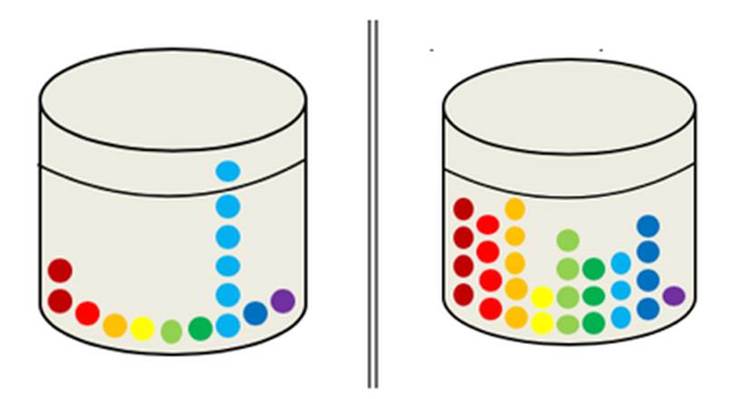
PIP Eligible vs PIP Ineligible
The reduction in benefits not only threatens the financial stability of disabled individuals but also risks increasing strain on local councils and the NHS. As people lose access to PIP, they may be forced to rely more heavily on council-funded care services, overwhelming already limited resources and leading to increased administrative and emergency service costs.
I urge you to consider the following actions:
I would be grateful for the opportunity to discuss these concerns further personally and to hear your stance on this critical issue.
I would like to request a face-to-face meeting at one of your Twickenham surgeries in the near future please, if not perhaps a Zoom or a telephone call. Please let me know if and when this would be possible.
Thank you in advance for your attention to this matter.
Yours sincerely,
Steve
Note: Image included above adapted from (totally unrelated) Neurodiversity article by “Teaching Times Group”
 This article titled “‘You don’t want to get better’: the outdated treatment of ME/CFS patients is a national scandal” was written by George Monbiot, for The Guardian on Tuesday 12th March 2024 08.00 UTC