Benefits

  • Will I keep getting my Personal Independence Payments?

    I was reminded today of this moving, beautiful and anonymously written article by Maeve Boothby O’Neill at the age of 21, who was struggling with severe ME, just four years before she died from the condition. I would be upset if the content became lost, so have taken the liberty of duplicating it below.

    Eight years later, as of 6th June 2025 it is still present on the website here, where you can also see comments from others about the post:

    https://www.lrb.co.uk/blog/2017/june/will-i-keep-getting-my-personal-independence-payments

    2 June 2017

    Will I keep getting my Personal Independence Payments?

    Anonymous

    I’m angry. I’m so angry it woke me up this morning. And I’m angry about being angry because I can’t channel the anger into anything productive because I can’t do anything productive. I am powerless to stop being ill and I am powerless to stop being angry.

    Being disabled is infuriating. Something that happened to me and was beyond my control has left me like a machine that’s been switched off – disabled – unable to do anything that a 21-year-old of my intelligence and interests might want or need to do. I have been sick for almost half my life, and housebound for the last four years. But that’s not the reason I’m angry.

    At some point in the near future an agent from Atos will be reviewing ‘how [my] health condition or disability affects [my] daily life’ so that a ‘decision-maker’ at the Department for Work and Pensions can say whether or not I’m still entitled to Personal Independence Payments. It’s not enough for my doctors to write letters saying that I have a chronic condition and there’s been no meaningful change since the time of my claim 28 months ago. The date of the appointment has been changed four times in four weeks, sometimes with less than seven days’ notice, presumably because disabled people don’t have lives of their own. Exactly what kind of ‘independence’ did they have in mind?

    I would like to ask the Atos agent if s/he likes her/his job, whether s/he does anything else besides interrogate disabled people, and why s/he thinks a 21-year-old would lie about not having been well enough to see anyone but their care workers, health professionals and mother since 2015, but I won’t. The DWP’s letters are aggressive, in an understated way, with the result that I don’t feel secure asking the Atos agent questions or even putting my name to this piece.

    Most conventions and laws and declarations on human rights agree that I have a right to life, and a right to be as healthy as I’m biologically capable of being. Supposedly, I also have a right to keep my life private. These rights are qualified in this country by a mean and punitive government that would prefer it if unemployed people and displaced people and disabled people didn’t exist – supposedly with the mandate of public opinion. I’m not ‘sleeping off a life on benefits’ (if only: being disabled is tiring but also physically painful, and it’s hard to sleep when you’re in pain) but perhaps my Tory-voting neighbours think that I’m stealing from them. They earn enough to pay tax and I’m sick enough to claim benefits. Actually, welfare. It isn’t a perk. Welfare payments are what you claim to keep you housed, warm, clothed, fed, safe, alive.

    PIP is meant to compensate disabled people for the added financial cost of living in a world that doesn’t make room for them. If I ever get to see the Atos agent, s/he will ask me several pages of questions about how my life is affected. The Atos agent will come to my home because I’m too unwell to go to the private health centre s/he uses – that isn’t sufficient evidence of how I’m affected, because I could be faking. To access my right to this welfare payment I am required to prove my life has been devastated, presenting it as a collection of medico-historical facts about all the things I can’t do, which reminds me of all the things I might have wanted to do and makes my existence sound abject and pitiful. Having abased myself, I will, I hope, continue to receive the playing-field-levelling amount of £76.90 per week.

    https://www.lrb.co.uk/blog/2017/june/will-i-keep-getting-my-personal-independence-payments

  • | |

    All 72 Liberal Democrat MPs back resourcing of ME/CFS Delivery Plan

    Tessa Munt, officer of the APPG for ME, announced that 100% Liberal Democrat MPs have now signed a letter urging Wes Streeting and Ashley Dalton to back the ME/CFS Delivery Plan with the funding required to properly implement it.

    Tessa Munt – “I’m so delighted that all 72 LibDem MPs signed this letter to @wesstreeting @AshleyDalton_MP asking the govt to back the ME/CFS Delivery Plan with the resources it deserves. May this be a huge encouragement to the ME community and the start of meaningful change. #WorldMEDay”

  • | |

    Petition – STOP the new 4 point PIP rule -Change.org

    Note: Content below copied from Change.org

    https://www.change.org/p/stop-the-new-4-point-pip-rule

    The Issue

    I am a chronically ill Independent PIP Consultant with the goal of providing the kind of support and awareness I WISH was available when I first became chronically ill (I was 29 years old, I am now 47). 

    I am entitled to and do claim PIP myself; this funding changed my life. The Government’s recent decision to introduce a new rule is threatening this lifeline for those who have fought through the invasive, degrading assessment process and finally won. They/we depend on this support. 

    They are saying you now need a MINIMUM score of 4 points in at least ONE daily living activity to keep/get the daily living funding from 2026 (new claims and on reviews). This change WILL deny access to the daily living component to those who are genuinely in need but cannot score the 4 points in a single activity. We know through our experiences the way the scores are allocated rarely match our daily life, many should have had 4 points but do not get this result.

    The Government must reconsider this change. We MUST protect the most vulnerable among us and ensure their dignity through compassionate support. Therefore, we need to urge our Government to reassess this new rule. 

    We need 100,000 signatures and then this (legally) must be discussed in parliament. I am not trying to be our spokesperson but I am trying to unite us. We need to raise our voices so loudly that activists and specialists can continue fighting on our behalf. This is how we help ourselves and those that cannot fight for themselves.

    Remember, YOU, your family, friends, neighbours and co-workers CAN all sign this petition

    It is NOT acceptable to target a vulnerable community WE MUST SPEAK UP and be HEARD

    Please, sign this petition now, please sign for the chronically ill, sign for fairness, and sign for justice.

  • | |

    Petition – Build your response to the government’s consultation on benefits – Sense

    Note: Content below copied from action.sense.org.uk

    https://action.sense.org.uk/page/169317

    The government is proposing making changes to the benefits system. This tool helps you write a response to their consultation. It is designed for disabled people and their families. 

    The government’s changes are complicated, so we’ve broken things down into four main proposals. Here’s how it works:

    1. We’ll ask a question or two about each proposal and suggest some things to think about in your answer. You don’t have to respond to every question.
    2. We’ll compile all your answers into one response.
    3. Copy this response into an email to send to the Department of Work and Pensions.

    This should take about 20 minutes to complete. While that might seem like a lot of time, it’s much more effective to take the time to write a consultation response that is tailored to you.

    Continue to complete the form here: https://action.sense.org.uk/page/169317

  • | |

    Petition – Stop Proposed Changes to PIP -Organise

    Note: Content below copied from Organise.network

    https://organise.network/actions/petition-stop-proposed-changes-to-pip-zqTA0zIpHYQ/saf/take-action

    We urge the Government to:

    Cease any changes to PIP eligibility that would reduce access for those in genuine need. Maintain inflation-linked increases to ensure PIP keeps pace with the cost of living. Conduct a transparent and meaningful consultation with disabled people and advocacy groups before implementing any reforms. 

    We stand against policies that put financial strain on disabled individuals and demand fair, compassionate, and well-evidenced reform.

    Sign this petition to protect the rights and support of disabled people in the UK.

  • A personal Email from me to Munira Wilson about Benefits cuts

    Email sent on: 24/03/2025 20:23

    Dear Munira,

    I am writing to express my deep concern regarding the recently proposed cuts to disability benefits, which are expected to reduce the benefits bill by £5 billion by the end of the decade. As someone affected by Myalgic Encephalomyelitis/Chronic Fatigue Syndrome (ME/CFS), I fear these changes will have a significantly detrimental impact on people like me, who rely on this support.

    The proposed tightening of eligibility criteria, especially now rejecting summation of different incapacities for Personal Independence Payments (PIP) means that only the most severely disabled will qualify, potentially leaving up to 1.2 million people without essential support. This is particularly concerning for those with ME/CFS, a broadly debilitating neurological condition affecting at least 250,000 people in the UK. Many have developed ME/CFS following COVID-19, further increasing the number of individuals requiring assistance.

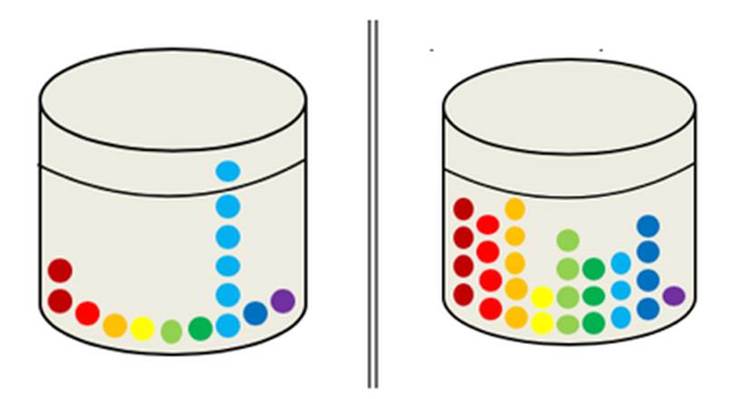
    Below is an illustration (adapted, please see note below) showing the unfairness of the new points scoring system proposed, where combinations of incapacities would not be considered equivalent e.g. to the proposed score of four or more in one specific incapacity:

    PIP Eligible vs PIP Ineligible

    The reduction in benefits not only threatens the financial stability of disabled individuals but also risks increasing strain on local councils and the NHS. As people lose access to PIP, they may be forced to rely more heavily on council-funded care services, overwhelming already limited resources and leading to increased administrative and emergency service costs.

    I urge you to consider the following actions:

    1. Oppose the proposed cuts to disability benefits: Recognize the long-term consequences these reductions will have on disabled individuals and the broader community, and advocate for policies that protect the most vulnerable.
    1. Continue your support All-Party Parliamentary Group (APPG) on ME: Your participation is already helping to ensure that the voices of those with ME/CFS are heard and that their unique challenges are addressed in policy discussions.
    1. Advocate for the implementation of the 2021 NICE guidelines and the forthcoming Department of Health and Social Care (DHSC) Delivery Plan for ME/CFS: These documents provide comprehensive recommendations for the diagnosis, management, and support of individuals with ME/CFS.

    I would be grateful for the opportunity to discuss these concerns further personally and to hear your stance on this critical issue.

    I would like to request a face-to-face meeting at one of your Twickenham surgeries in the near future please, if not perhaps a Zoom or a telephone call.  Please let me know if and when this would be possible.

    Thank you in advance for your attention to this matter.

    Yours sincerely,

    Steve

    Note: Image included above adapted from (totally unrelated) Neurodiversity article by “Teaching Times Group”