ME / Chronic Fatigue Syndrome

  • Hidden Illness, Public Grief, and Research Funding: Why ME/CFS and Other Gradual-Onset Conditions Struggle for Recognition

    Author: Steve Fifield 3rd March 2026

    I wrote a simple draft paper on possible reasons why ME/CFS and similar conditions struggle so much for public recognition and funding.

    Executive Summary

    This briefing paper proposes that illnesses characterised by gradual onset, symptom invisibility, and ambiguous loss—such as Myalgic Encephalomyelitis/Chronic Fatigue Syndrome (ME/CFS)—face structural disadvantages in public recognition and research funding.

    In contrast to diseases associated with sudden, catastrophic diagnoses (e.g., cancer, motor neurone disease, multiple sclerosis), ME/CFS often progresses gradually, without a singular crisis moment that mobilises families, media, and policymakers.

    Drawing on psychological research, communication theory, medical sociology, and health policy analysis, this paper outlines evidence supporting the hypothesis that acute grief catalyses mobilisation, while chronic ambiguity fosters adaptation rather than advocacy.

    1. Proposition Statement

    Public support for disease research funding is strongly influenced by emotional salience, narrative clarity, and visibility.

    • This paper proposes that:
    • Sudden, high-intensity diagnoses generate collective grief and advocacy mobilisation.
    • Gradual, invisible illness trajectories tend to produce adaptation and normalisation rather than public outrage.
    • Conditions lacking clear biomarkers or dramatic ‘trigger events’ may remain socially marginalised and underfunded.

    2. Psychological Evidence: Emotion, Grief, and Giving

    Research in behavioural psychology demonstrates that emotional intensity significantly influences charitable giving and advocacy behaviour.

    • Key evidence includes:
    • The ‘Identifiable Victim Effect’ shows individuals donate more readily when harm is concrete and personal (Small & Loewenstein, 2003).
    • Personal experience with illness strongly predicts sustained advocacy engagement (Bekkers & Wiepking, 2011).
    • Acute grief produces action-oriented coping responses, whereas ambiguous loss can lead to prolonged emotional adjustment rather than mobilisation (Boss, 1999).

    3. Media Visibility and Agenda Setting

    Agenda-setting research demonstrates that media coverage shapes public perceptions of issue importance (McCombs & Shaw, 1972).

    • Relevant dynamics:
    • Diseases with dramatic diagnostic narratives are more likely to receive concentrated media attention.
    • High-visibility campaigns (e.g., viral fundraising movements) significantly increase funding inflows.
    • Invisible or contested illnesses struggle to achieve sustained media framing as urgent biomedical crises.

    4. Medical Sociology: Invisible and Contested Illness

    ME/CFS has historically been classified as a contested or medically unexplained illness.

    • Sociological findings show:
    • Illnesses lacking objective biomarkers often face legitimacy challenges (Barker, 2008).
    • Symptom invisibility contributes to stigma and disbelief (Dickson et al., 2007).
    • Gradual functional decline may be socially normalised within families, reducing collective mobilisation.

    5. Research Funding and Disease Burden

    Multiple analyses indicate that biomedical research funding does not consistently align with disease burden.

    • Findings relevant to ME/CFS:
    • Funding levels for ME/CFS have historically been substantially lower than expected based on disability-adjusted life years (DALYs) (Dimmock et al., 2016).
    • Mortality salience and media visibility correlate more strongly with funding allocation than chronic disability alone.
    • Conditions perceived as life-threatening often secure greater political and philanthropic urgency.

    6. Policy and Strategic Implications

    If this proposition is valid, important implications follow for research institutions, advocacy organisations, and policymakers.

    • Potential strategies:
    • Develop narrative frameworks that communicate cumulative functional loss without sensationalism.
    • Align funding mechanisms more closely with disease burden metrics rather than media salience.
    • Invest in biomarker research to strengthen clinical legitimacy.
    • Promote public education campaigns that clarify the biological basis and severity of ME/CFS.

    Conclusion

    ME/CFS exemplifies how gradual-onset, invisible illnesses may be structurally disadvantaged within public funding ecosystems shaped by emotion, visibility, and narrative shock.

    Addressing this imbalance requires deliberate policy design, improved public communication, and recognition that chronic disability without dramatic rupture can be equally life-altering.

    Selected References

    1. Barker, K. (2008). Electronic support groups, patient-consumers, and medicalization.
    2. Bekkers, R., & Wiepking, P. (2011). A literature review of empirical studies of philanthropy.
    3. Boss, P. (1999). Ambiguous Loss: Learning to Live with Unresolved Grief.
    4. Dickson, A., et al. (2007). Stigma in chronic fatigue syndrome.
    5. Dimmock, M., et al. (2016). Estimating the disease burden of ME/CFS in the United States.
    6. McCombs, M., & Shaw, D. (1972). The agenda-setting function of mass media.
    7. Small, D., & Loewenstein, G. (2003). Helping a victim or helping the victim: Identifiable victim effect.
  • | | | | |

    #Justice4ME Campaign Update No. 3

    Quote from Sarah Boothby on Social Media

    We have now taken legal advice, thanks to your donations, and instructed our lawyers to proceed with sending a letter before claim to the Department of Health and Social Care (DHSC).  This does not mean there will be a claim (an application to the court for Judicial Review of the Final Delivery Plan for ME/cfs) it means there are inconsistencies within the Plan that make it vulnerable to legal challenge.

    We doubt this vulnerability is what was intended in the drafting of the Plan.  We know people with ME/cfs have had cross party political support for decades.  We know hundreds of people contributed their knowledge, lived experience and expertise to developing the Plan, so we hope these snags will be resolved without a court hearing being necessary.  People living with ME, and the NHS staff trying their best to deliver safe clinical care without clear, succinct, safe clinical guidance to follow, deserve nothing less.

    If the reply from DHSC to our letter is not satisfactory, and the inconsistencies we have identified in the Final Delivery Plan persist, we must apply for Judical Review by 21 October at the latest.

    At this stage, we cannot share with you the advice we have been given but we will explain everything the very first chance we get.  Sorry if that’s frustrating; it is for us!  If the case does come to court the legal arguments will be made public that way but we hope the DHSC will make the changes needed sooner.  The changes needed are not huge, they are efficient, and they will not cost the NHS more money than is already being wasted on catastrophic mismanagement of ME.

    This is a first step, made possible only by your generosity and the long history of injustice that got us here.  We are honoroued by so many of you sharing your time, comments and money with us.  We could not have got so far without you.  We rely on your feedback on social media to be sure the aims of #Justice4ME reach the widest audience possible.

    More updates will follow in the coming weeks, including additional endorsements and images on our homepage.  Meanwhile, please keep on sharing our campaign with everyone you know, however unlikely!  Since we met the initial fundraising target in our launch week, the campaign to raise the final third for this first phase will continue throughout October.

    Thank you, thank you, thank you for helping make #Justice4ME a serious proposition. Let’s have our NHS knowing what to do about ME without doubts, indecision or delays – all over the UK, please.

    #JusticeforME

  • | | |

    Professor Deepa Mann-Kler Director & Producer – Introduces the Discover M.E. Film

    Professor Deepa Mann-Kler Director & Producer introduces an award winning 6-minute, animated video that shares the voices of, and the insights into, the lives of 6 people living with Myalgic Encephalomyelitis in Northern Ireland. It places the viewer into real life scenarios that are normally never seen, heard or experienced. This narrows the gap between an individual’s preconceived beliefs and real personal experience. It can be viewed via a 3D, virtual reality headset for maximum experience (directly arranged by contacting the Charity), or as a normal 2D video via this YouTube link.

    Produced between Hope 4 ME & Fibro Northern Ireland, Silverink, and Neon. To date, it has won 4 international short film awards.

    Discover M.E. Film (no Introduction)

    To just watch the video without the introduction, please click below:

  • |

    Justice For ME Campaign Launched

    Please share – A very important campaign was launched on the evening of 29th August 2025 to help provide legal support for targeting improvements in medical care, thereby benefiting everyone with ME or Long Covid induced illness.

    “Campaigning for ME (Myalgic Encephalomyelitis) to be medically managed safely, to protect families from permanent disability or death from neglect of the illness”

    Find history, campaign details information and endorsements available on on the Crowd Justice site via the following link: justice4me.uk

    Update 31/08/2025 – On a public facing Facebook comment, where some were discussing the nature of the campaign and potential legal cases, in answer to a question raised by an ME patient, Sarah Boothby (one of the endorsers of the campaign and mother of Maeve Boothby O’Neill, who tragically died from ME in October 2021 aged only 27) shared her understanding of what she believes #JusticeForME is intending (my bold, for emphasis, below):

    “It is a case against the government, for neglecting to deliver a specialist health service in its Final Delivery Plan for ME/cfs.

    Without Consultant led NHS specialist services everyone with #ME in England is denied access to the disability rights other medical conditions are given as granted and, if/when they need hospital treatment, no provision is made for the specialist nursing care demanded by the nature of the illness (hypersensitivies to all sensory stimuli that increase with #PEM). This automatically triggers the worst PEM ever – adding years of the most horrible symptoms to an already horrible illness. The campaign is to stop this neglect.”

    As of this evening (31/08/2025), the campaign has astonishingly already received over £5,000 in pledges of first target of £6,000 within 48 hours of launch, with 28 days still remaining.

    Full details and donations via the link here, taking you to Crowd Justice: justice4me.uk

  • | | | |

    Bateman Horne Clinical Care Guide for ME/CFS, Long COVID & Infection-Associated Chronic Conditions

    Released as version 1.0 today, a new and outstandingly comprehensive reference guide for both Doctors and Health Care Workers. The reference guide we needed 20 years ago! This certainly feels like an essential training reference:

    “A Roadmap to Better Care:
    Clinical Care Guide for ME/CFS, Long COVID &
    Infection-Associated Chronic Conditions

    Developed by the OMF-supported Medical Education Resource Center (MERC) at Bateman Horne Center, this resource offers a practical path forward—one grounded in clinical expertise, research, and the lived experience of patients”

    https://batemanhornecenter.org/clinical_roadmap

    Direct link to download the guide PDF

  • | |

    All 72 Liberal Democrat MPs back resourcing of ME/CFS Delivery Plan

    Tessa Munt, officer of the APPG for ME, announced that 100% Liberal Democrat MPs have now signed a letter urging Wes Streeting and Ashley Dalton to back the ME/CFS Delivery Plan with the funding required to properly implement it.

    Tessa Munt – “I’m so delighted that all 72 LibDem MPs signed this letter to @wesstreeting @AshleyDalton_MP asking the govt to back the ME/CFS Delivery Plan with the resources it deserves. May this be a huge encouragement to the ME community and the start of meaningful change. #WorldMEDay”

  • | | | |

    Fatigue, Mitochondria and the Energy Puzzle

    The latest video from Dr. Sanjay Gupta shows true compassion for those suffering from ME, Long Covid and POTS. More selected videos from Dr. Sanjay Gupta can be found here.

    Fatigue, Mitochondria and the Energy Puzzle

    Dr. Sanjay Gupta explores mitochondrial dysfunction as a cause for unexplained long term fatigue, brain fog, post-exertional malaise and temperature dysregulation


  • | |

    New Abstract on invasive CPET – Promising outcomes

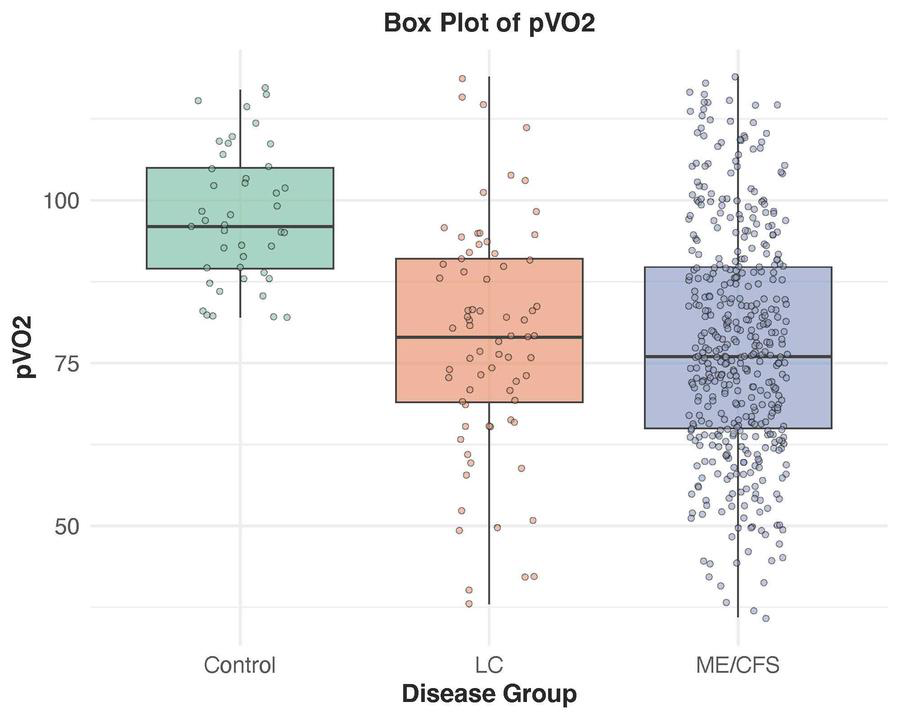
    The American Journal of Respiratory and Critical Care Medicine has posted a new abstract authored by David Systrom et al, which evaluated invasive CPET testing. The test includes iCPET results from 438 ME/CFS patients, 73 Long Covid patients, and 43 symptomatic but otherwise normal controls.

    The measurement method is illustrated here from their previous 2023 report [TBA]

    The full Abstract within the American Journal of Respiratory and Critical Care Medicine can be found here: https://www.atsjournals.org/doi/abs/10.1164/ajrccm.2025.211.Abstracts.A7881

    An image extract from the article is shown below, showing correlation of pVO2 between each cohort and outcomes, and remarkably similar results from ME and Long Covid:

  • |

    Doctors As Patients

    YouTube Movie has been released exposing the experience of five doctors living with ME, Long Covid, Lyme Disease and other related conditions. The video is not primarily narrated in English, but has English Subtitles.

    “Five medical doctors open up about living with #PAIS/#IACC conditions like ME, #longCOVID, and chronic #Lyme. It’s a format that I believe has never been shown before, not just in the Netherlands but possibly worldwide! They speak candidly about their experiences with illness, what they were taught (or not taught) in medical school, and how that shaped their own treatment decisions—sometimes even leading to harm. They reflect on how becoming patients themselves radically changed their views on medicine, science, and what needs to change in healthcare. It’s raw, honest, and incredibly insightful—for medical professionals, researchers, politicians, and patients alike.”