-
-
-
#ThereForME publishes first UK Ecosystem report for ME and Long Covid
The #ThereForME team have published the first version of their UK Ecosystem Report for ME and Long Covid, created in collaboration with CrunchME. This report maps out key stakeholders and initiatives across the UK, aiming to inform advocacy efforts, policymakers, and potential funders of research and care.
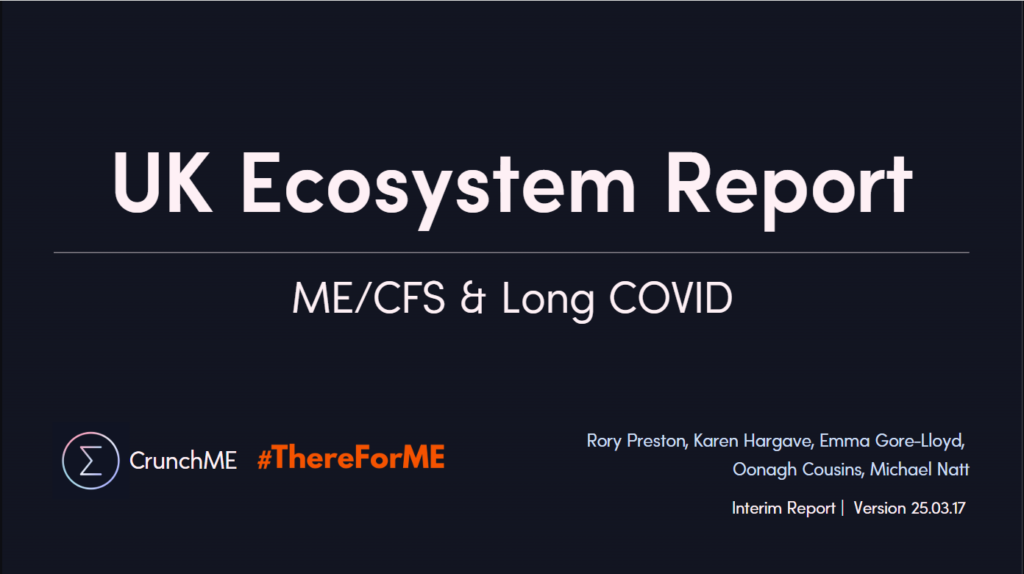
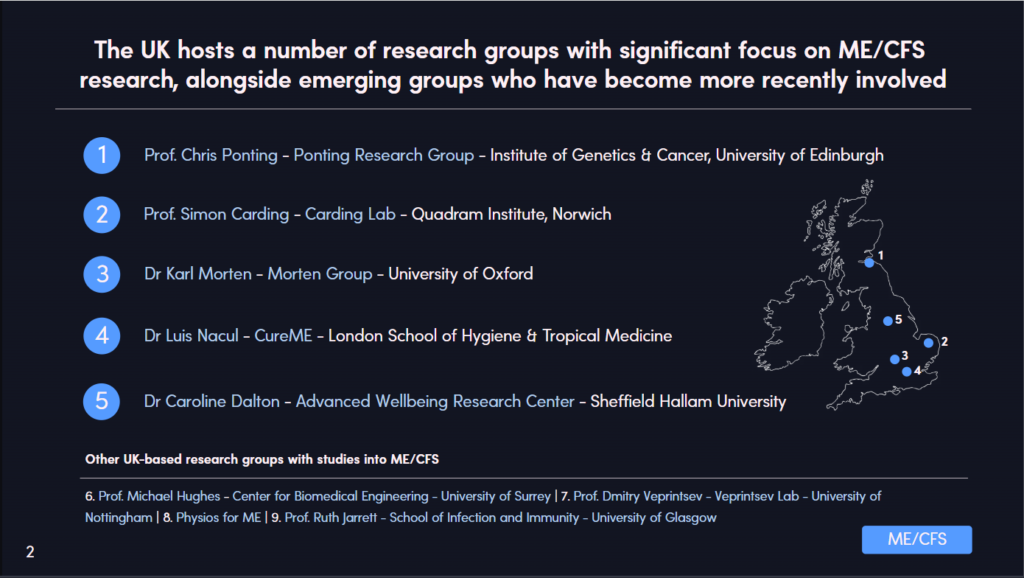
The report tracks active and future ME/CFS research projects within the UK. Following each overview slide like the one below, are detailed additional slides showing the technical nature of the work and interventions being trialled.
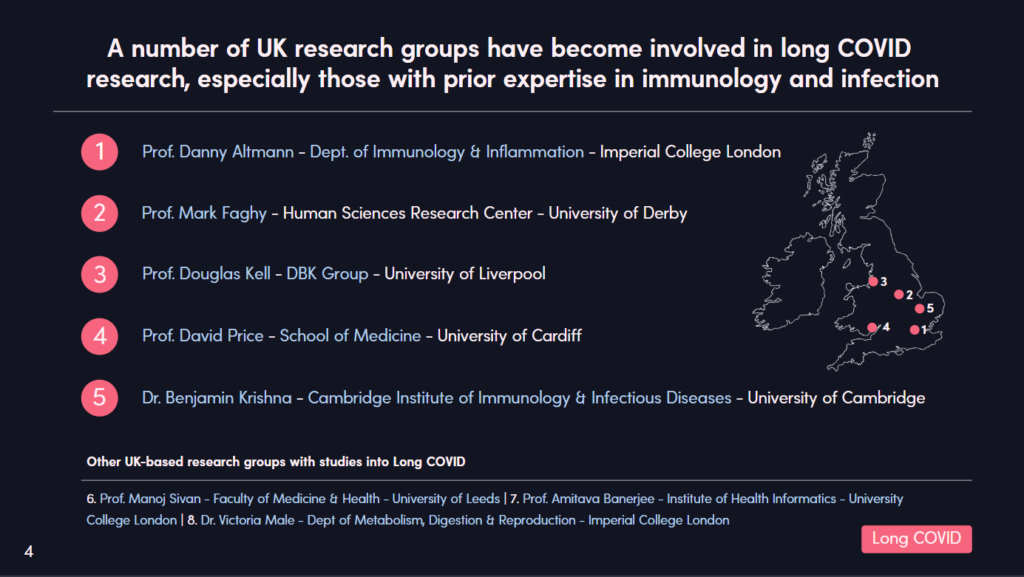
Following slides go in to show research projects for Long Covid within the UK, Clinics and Clinicians, Biotech resource, and forthcoming conferences.
The full UK ecosystem report for ME and Long Covid can be found here
Everything about the #TherForME campaign can be found on the TherForME website
-
Long Covid Clinic – What You Can Do
Harry Leeming introduces the Visible App and wearable armband
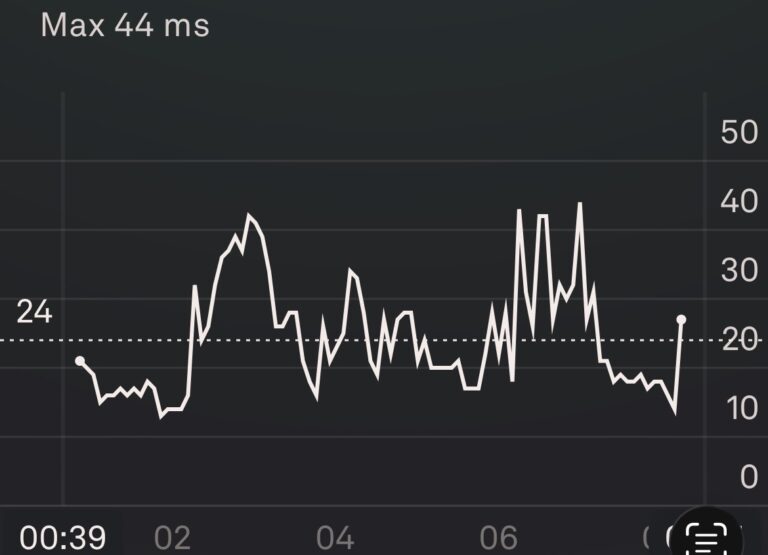
Harry Leeming introduces the Visible App monitoring and wearable armband, allowing daily symptom tracking, morning Heart Rate Variation measurement (even without the armband) and with the armband, continuous Heart Rate monitoring and Pace Point scoring.
-
Preprint – Smartphone-based monitoring of heart rate variability and resting heart rate predicts variability in symptom exacerbations in people with complex chronic illness
Annie Aitken1; Abbey Sawyer; Akiko Iwasaki; Harlan M. Krumholz; Rory Preston; Harry Leeming; Jenna Tosto-Mancuso; Amy Proal; Michael A. Osborne; David Putrino
Version 1 posted 29 Nov, 2024
Abstract
Background: Complex chronic conditions like Long COVID and Myalgic Encephalomyelitis/Chronic Fatigue Syndrome involve energy limitations and changes in heart rate variability (HRV) and resting heart rate (HR). Mobile health technologies now offer real-time, valid measurements of HRV and HR, advancing symptom monitoring and management. Using a high-density dataset from an observational longitudinal study, we aimed to describe, quantify, and predict within-person co-variations in daily biometric data and subsequent crash, fatigue, and brain fog symptom occurrences.
Methods: Leveraging data collected through a mobile health app (n=4,244), we developed predictive models using mixed-effects linear regression and logistic regression to explore how within-person fluctuations in biometrics (HR, HRV, and respiratory rate) predict dynamic change in symptomology (crash, fatigue, and brain fog). Predictive performance was assessed using 5-fold stratified cross-validation and compared to a 20% holdout set to evaluate model generalizability to new observations and individuals.
Results: Across all symptom domains, within-person changes in HRV and HR consistently emerged as key predictors of symptom change across all models, with higher HR and lower HRV conferring risk for crashes, fatigue, and brain fog. Moreover, 7-day biometric stability (or variable dispersion) was a robust predictor of symptom occurrence and severity. Models trained solely on biometric features achieved moderate predictive performance in the stratified cross-validation set; however, incorporating random effects to capture individual-specific variations and prior-day symptom reports substantially enhanced model accuracy, with AUC values reaching .91.
Discussion and Conclusion: This study is the first to use data-driven models to predict everyday symptom experiences in individuals with complex chronic illnesses based on biometric fluctuations. Findings demonstrate the potential utility of mobile health tools for real-time monitoring of symptoms and highlight the need for further research to refine these predictive models and integrate them into clinical decision-making processes.
Read the full preprint article here: https://www.researchsquare.com/article/rs-5423422/v1